- J63 Silesian Interlude, Finished
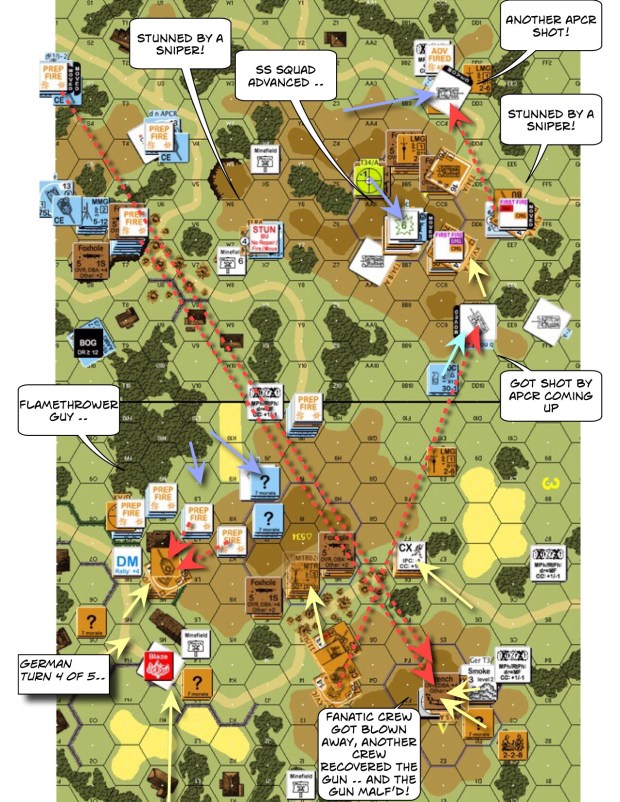
- CH18 Raging Furnace, Turn 3 (of 5) German
- DB133 A Deadly Landscape, Turn 2 (of 5) Russian
Ongoing
Ongoing
This scenario is played on part of the Red Barricades map. SAN starts at 4 for the Germans and 5 for the Russians and increases to 5 & 7 respectively on Turn 2 and 6 & 8 on Turn 4. The Russians are given the chance to open the attack but German reinforcements will come in on Turn 3 (of 5).
They largely compete for the buildings, trenches, rubble, bridge & storage .. but every sniper kill counts as well.

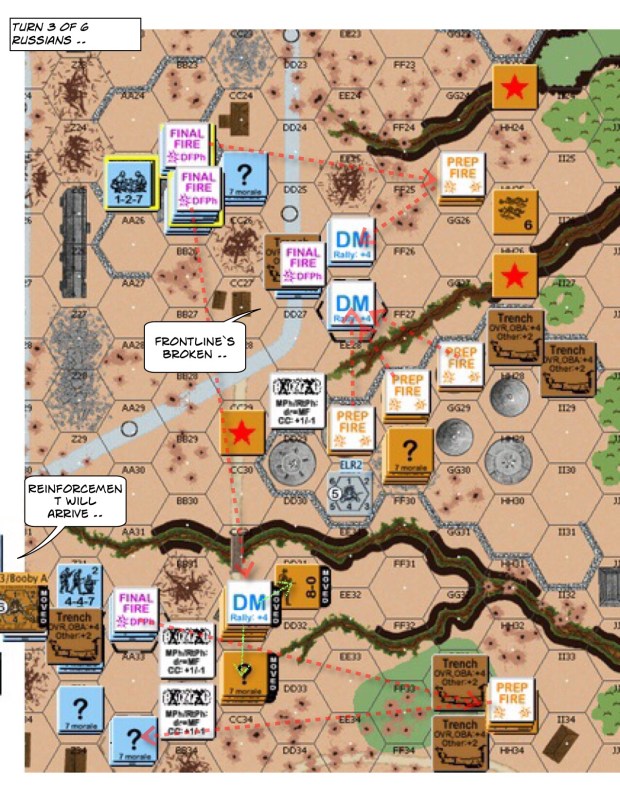
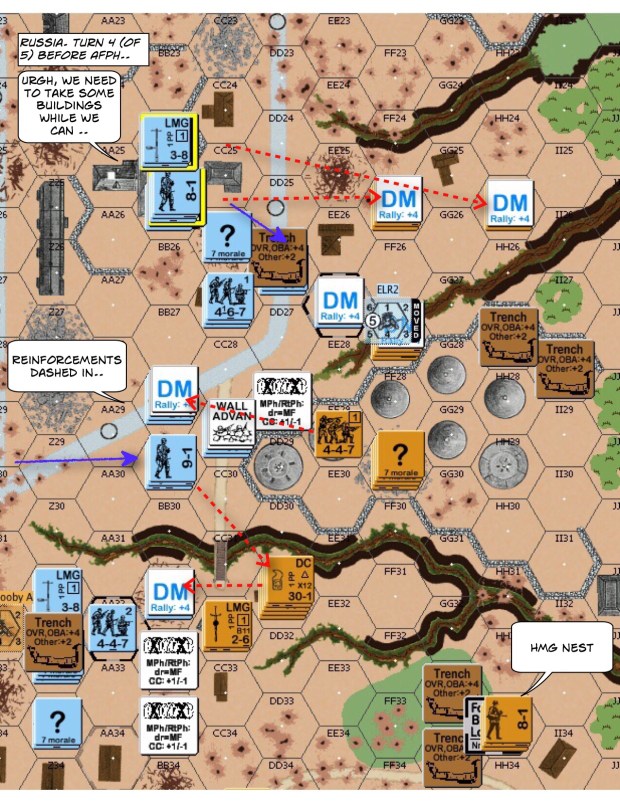
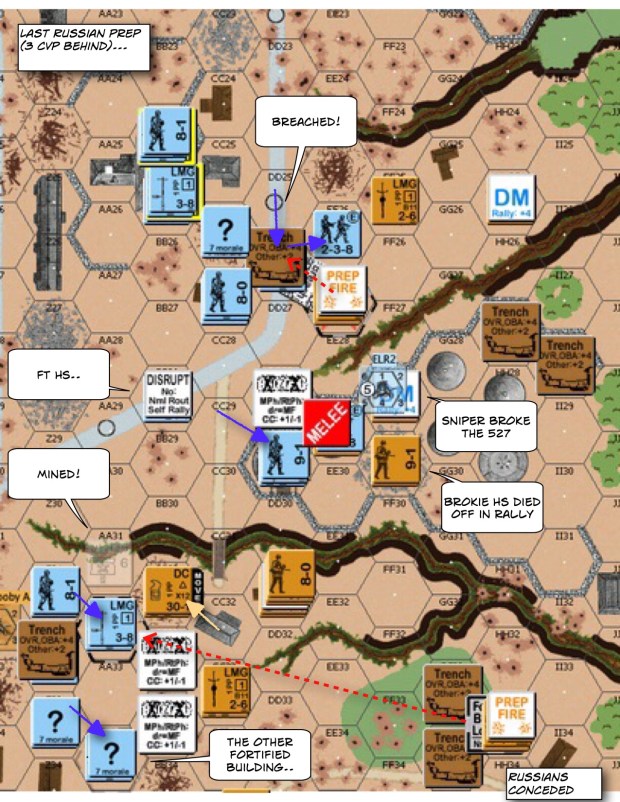
This week we started with an old design, CH18. The Germans have to take 2 out of 3 hilltops and earn more CVPs than the Russians. Aside from the standard CVPs, the Germans get points for clearing out the six hexes around the hilltops. Likewise, the Russians get (a lot more) points if they can stay around the tops.
This scenario has a very interesting simultaneous setup with a die roll deciding who’d go first. As my opponent quipped, going last might not be a bad thing as you can simply advance onto the hilltops. The nature of this arrangement means opposing forces might “materialise” right in front of you at game start! There’s an SSR that gives the defender in the first Prep Fire phase the ability to Gun Duel and shoot back.
The German entry edges are the top and the left. However, since the Russians can only setup in the red circles. Germans can attack from the right if they like, if they are comfortable with Russian reinforcements coming in behind them from the right and the bottom of the screen.
I am very mindful of a few things when I did my Russian setup.
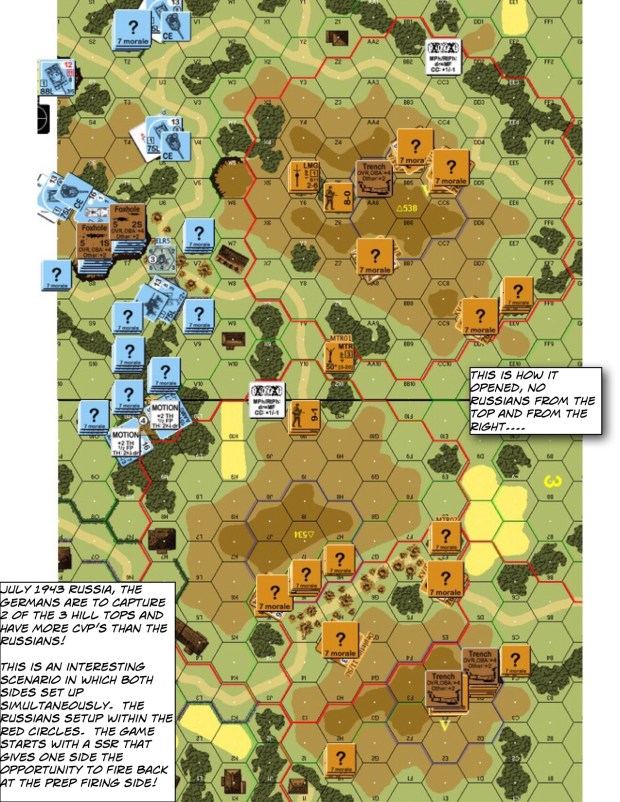
 Ladies & gents – don’t be like me. I misread the SSRs to this scenario and thought that German reinforcements can only come in from the top and to the left. No – the German reinforcements come in from the top and the RIGHT and the Russian reinforcements come in from the bottom and the left.
Let me elaborate further. This scenario has a rather creative SSR which allows you to purchase half your lost CVPs as reinforcements. The restriction is that you can only purchase half the # of each unit type in your OB.
While my 76L Artillery (hill top on the bottom right) finally fixed itself and did a number on a German deathstar, my deployment was oriented towards attackers coming in from the left and not the right. *Horror*
The Germans sent a STuG up Y9. Since it’s bypassing the woods, it’s considered on the upper level. Non Turreted as it is, its TH after all the modifiers was comparable to mine, even though all I had to do is to turn my slow turret. I fired and missed, APCR and all. He fired and connected.
The Germans then sent a STuG up “behind” us on the right, looking to take out the KV1 with the 9-2 Armor Leader. Fortunately its’ within reach of the Hero & his ATR on the hill on the bottom right. He directed the pinned HMG to stun the STuG crew. The KV1 then swung his turret around and Shocked him.
Unfortunately, the Germans got rid of that Shock immediately after. The KV1 now faced a choice : whether to run or to shoot the STuG again. If I run, it’s quite likely that I will be shot. If I stay and shoot, my TK is 13(+1) vs his AF of 8. I have a 3 CVP 9-2 armor leader in this thing.
I shot, connected and killed the STuG, much to our relief ..


One more German move to go and all three hill tops are still under Russian control, Germans resigned.
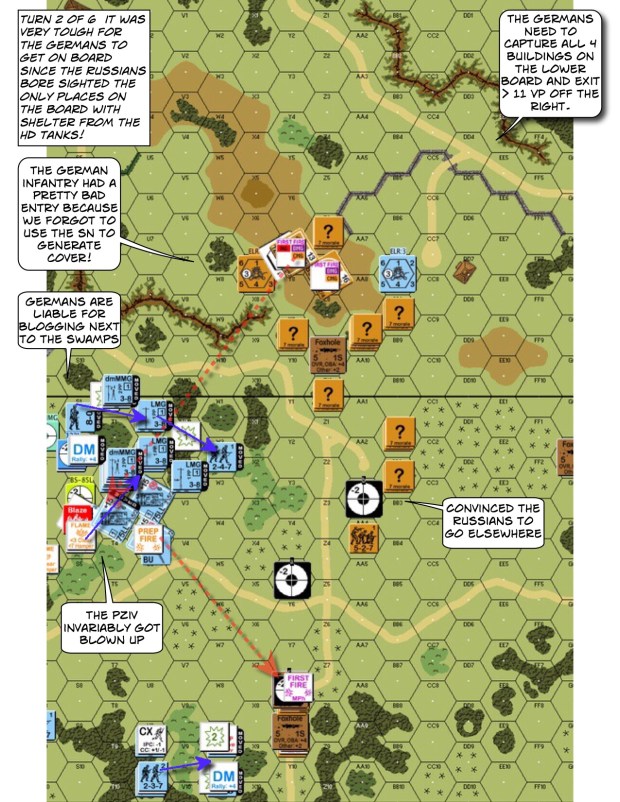
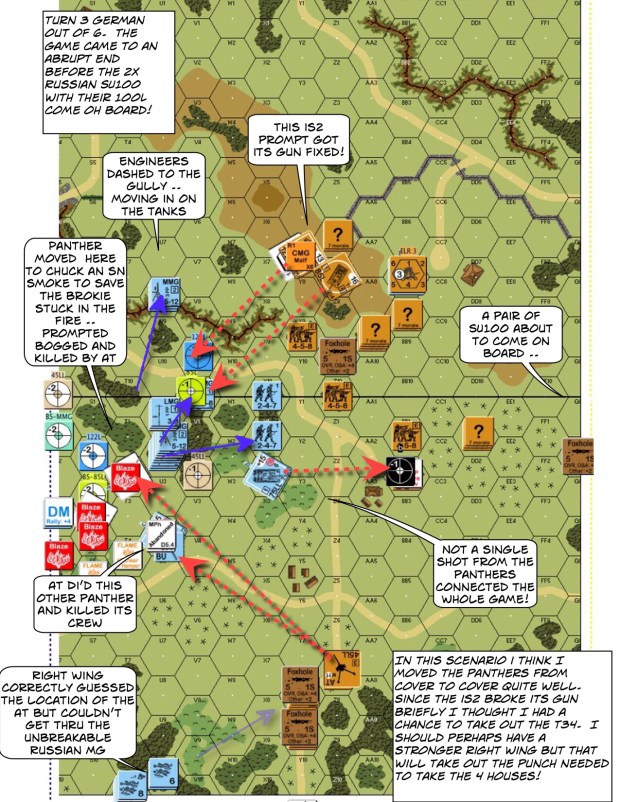
This is December 1942. The Australians are looking to dislodge the IJA from the Gona mission in 5 CG dates.
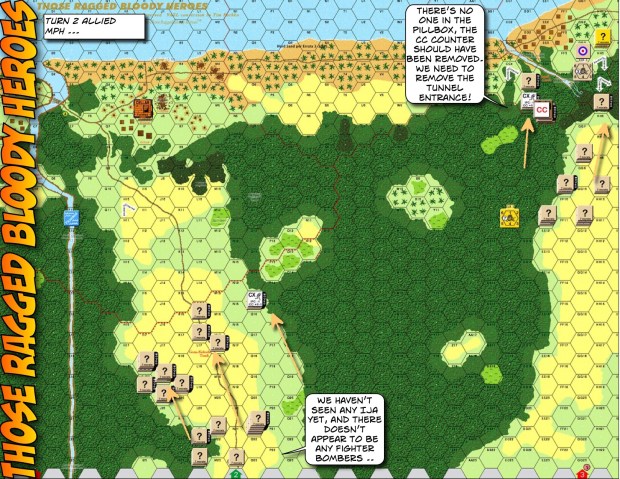
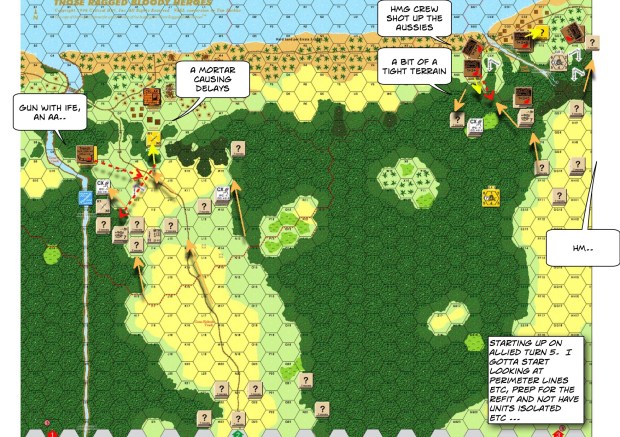

This is not looking good. I forgot how in Platoon Leader (CH’s “standard” campaign) rules, you need to put a slew of foxholes in as strategic locations. In this case I need to link up my troops with the 3 entry points. The good news is that I might still have one Prep Fire left. The bad news is obviously that FHs usually need a couple of turns to prepare, turns that I don’t have.
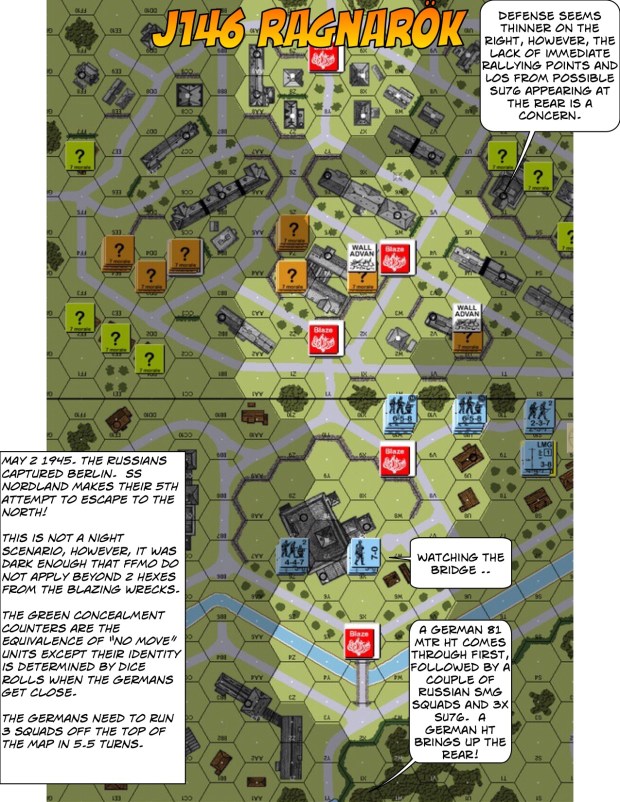


 Alan Findlay at Broken Ground Design, followed his sample sheets of German, Polish, Partisan and Axis Minors counters with a sheet of French vehicles last week. In case you are not aware, Mr Findlay is looking to release an big suite of redesigned Advanced Squad Leader counters which includes “standard” nationalities as well as “new” nationalities.
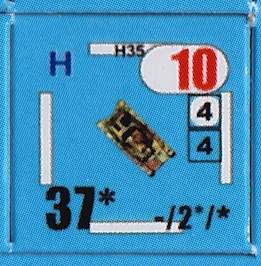
I took a careful look at the Vehicle counters this weekend. In the process I placed a few of my Avalon Hill French counters side by side for comparison.
Let me show you a few photos first:


My first impression is that the vehicle graphics are too small. When I put the Broken Ground vehicles next to the old Avalon Hill counters, the graphics are indeed smaller. The smaller graphics is unfortunately combined with a camouflage pattern that completely, well, camouflaged the outlines of these vehicles.
My next thought is then, can I tell which vehicles are Open-Topped ?
You can see for yourself from the upper set of photos where I compared the Avalon Hill counter for the Open-Topped AM Dodge against the Broken Ground one. You can still tell that the AM Dodge is Open-Topped from the Broken Ground counter but it’s not as easy.
I wonder if it will help if the vehicles are made bigger, the camouflage tuned to a lighter saturation and shading added to bring out the vehicle contours. Then again, I would be asking Mr Findlay to conform to a different style and would probably be asking too much. A way to better communicate “Open-Topped” will help though. Perhaps we can make the Movement Points a light blue (it’s on a white background anyway) like certain SS vehicle counters.

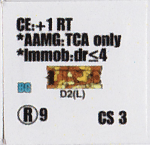
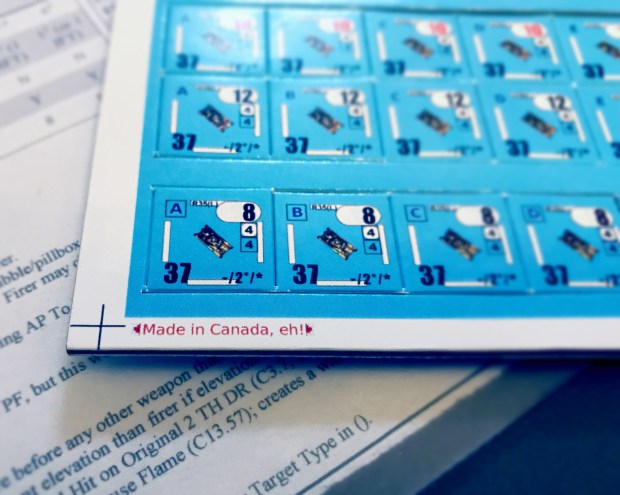
Flipping over the counters, I like the fact that Mr Findlay decided to use a bold font on the back to improve readability.
The improvements to readability are even more pronounced on the front. Mr. Findlay decided to put a black outline around the white symbol that is the background for the Movement Points. Now it’s much easier to tell whether a vehicle is Fully Tracked [D1.13], Half-Tracked [D1.1.4], Armored Car [D1.12] or Truck [D1.15].
 Mr Findlay has also made it much easier to tell, by accentuating the difference and adding black outlines, the difference between Fast Turret [D1.31], Slow Turret [D1.32], Restricted Slow Traverse [D1.321] and a One Man Turret [D1.322].
Both of these improvements will certainly speed up play.
These vehicle counters and the infantry counters that I have previously reviewed are both very well made. I would even suggest that the printer did a better job with these vehicle counters than it did with the sample batch of infantry counters – evidence that previously mentioned issues are addressed.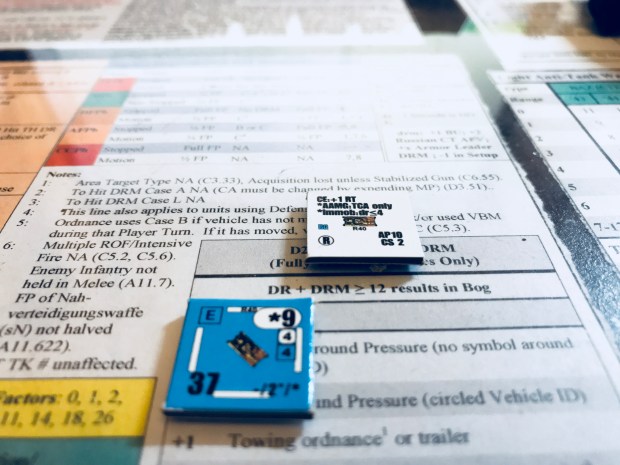
(All Photos are Copyrighted to the Hong Kong Wargamer. Do not use without permission.)
Shortly after Mr Paul Weir lent his expertise in CPVA firearms. The chief designer for Forgotten War: Korea 1950-1953, Kenneth Katz gave us even more details. The following is reprinted with his permission.
The CPVA entered the war with a little bit of everything, which made their logistics a nightmare. That is why their Initial Intervention MG are B11. I assumed that the MG which were acquired in the 1930s were mostly gone by 1950, either destroyed in war or worn out beyond repair. So the most common types of LMG in service with the CPVA in 1950 would have the the weapons that were either manufactured in China during the 1940s (the ZB-26 in 7.92 x 57mm), captured from the Imperial Japanese Army (IJA) (Type 11 and Type 96 in 6.5mm and Type 99 in 7.7mm), and supplied by Lend Lease (mostly Canadian-manufactured Bren Mk II in 7.92mm).  The LMG counter artwork is for the ZB-26, probably the most common weapon.

Type 24
Using the same logic, the most common MMG/HMG was the Type 24, which was a Chinese-manufactured Maxim design in 7.92 x 57mm. Just as with the German MMG/HMG, the MMG and the HMG are the same weapon, with more ammo for the HMG. The CPVA also used Japanese MMG/HMG in 6.5mm and 7.7mm, and assorted other weapons.


The artwork on the counters represents the standard Soviet MG of the period.
LMG = DP-28 or DPM or Type 53 (Chinese-manufactured DPM)
MMG = SG-43 or SGM or Type 53 (Chinese-manufactured SG-43)
HMG = PM1910
0.50 cal HMG = DShK-38 or DShKM (Chinese-manufactured DShkM was the Type 54, so first entered service after the Korean War)
The CPVA was using 7.92 x 57mm (Mauser), 7.62 x 54R mm (Soviet), 6.5mm (Japanese), 7.7mm (Japanese) and smaller amounts of 30-06 (American) and .303 caliber (British) ammunition for rifles and machine guns at the same time.
Kangzhan: Guide to Chinese Ground Forces 1937-45, Leland Ness with Bin Shih, Helion & Company, 2016
Chinese Civil War Armies 1911–49, Philip Jowett, Osprey Publishing, 1997
The Chinese People’s Liberation Army since 1949, Benjamin Lai, Osprey Publishing, 2012
The Communist Chinese Army (DA 30-51), Department of the Army, September 1952
http://www.gamesquad.com/forums/index.php?threads/forgotten-wars-3-guns.146997/#post-1925691
Counter Art : Hong Kong Wargamer
Photos : 抗战机密档(中日军队轻武器史料)
Mostly Stories about American Marines
Blogging Advanced Squad Leader AAR After Action Reports since 2013
Advanced Squad Leader Scenario After Action Reports
Blogging Advanced Squad Leader AAR After Action Reports since 2013
History and Hardware of Warfare
ASL & The Path To Redemption
Comprehensive Resource for Advanced Squad Leader
Washington DC Area Advanced Squad Leader Game Club
Blogging Advanced Squad Leader AAR After Action Reports since 2013
Blogging Advanced Squad Leader AAR After Action Reports since 2013
Blogging Advanced Squad Leader AAR After Action Reports since 2013
Advanced Squad Leader (ASL) Tournament
Blogging Advanced Squad Leader AAR After Action Reports since 2013
Blogging Advanced Squad Leader AAR After Action Reports since 2013
RitterKrieg Home
"A15.1 The cauldron of battle, which destroyed so many units that failed the test of arms, could also forge better soldiers and/or acts of desperation borne of heroism or despair."
An ASL Tournament held in West Dover, VT October 29-November 1, 2026
 Advanced Squad Leader AAR Blog / Advanced Squad Leader After Action Reports